

Where to Buy Discontinued Ceramic Molds: 2026 Guide
Last Updated: October 23, 2026
Quick Summary
You can buy discontinued ceramic molds through online marketplaces and community listings, licensed makers and reproducers, and collector groups that trade originals. Backwoods Ceramics and Molds produces and curates classic lines including Holland Mold, Ocean State, Nowell, and Gare, and offers Atlantic molds through a licensing agreement. For new production, discontinued designs are listed on a special-order basis.
- Search with the maker's name plus the model number, and run each query as a separate saved search.
- Search misspellings like Holland mould, since misspelled listings sell for less because they get fewer views.
- Use completed sales rather than asking prices to set your offer and spot underpriced listings.
- Check the cavity for a chalky or crumbling surface, chips, cracks, and a legible maker's mark before paying.
- The 342C Original Style Extra Lg Branch to 342 is a discontinued mold available at $286.00 on a non-refundable basis.
Table of Contents
- Where to Buy Discontinued Ceramic Molds: The Options That Work
- Online Marketplaces and Community Listings
- Licensed Makers and Reproducers
- Vintage Ceramic Molds for Sale: How to Search and Sort
- Holland Mold Discontinued Molds: Identification and Sourcing
- Gare Discontinued Molds and Other Classic Lines
- Used Ceramic Molds: Condition Checks Before You Pay
- Pricing, Shipping, and Safe Transactions
- When a Mold Is Gone: Alternatives and Reproduction
- Frequently Asked Questions
Where to Buy Discontinued Ceramic Molds: The Options That Work
Finding discontinued ceramic molds is a hunt, not a shopping trip.
Most guides point you to a single marketplace and stop, which is why so many crafters give up on patterns that went out of production decades ago.
Below, we break down where to look, how to identify what you find, and what to check before money changes hands.
Online Marketplaces and Community Listings
Online marketplaces and community listings are the fastest route to vintage stock, but they reward patience and precise search terms.
Search with the maker's name plus the model number when you know it. When you do not, use descriptive terms: "slip mold," "hump mold," "ornament mold," "plate mold." Set saved searches and alerts so new listings reach you instead of the other way around.
Licensed Makers and Reproducers
Licensed makers and reproducers keep classic lines alive by producing from original or authorized masters.
Backwoods Ceramics and Molds produces and curates several classic mold lines, including Holland Mold, Ocean State, Nowell, and Gare, and offers Atlantic molds through a licensing agreement.
One caveat: reproduction means the mold is new, not vintage. If you are collecting originals, ask directly whether a piece is old stock or a new cast.
Vintage Ceramic Molds for Sale: How to Search and Sort
Vintage ceramic molds for sale turn up constantly, but the good ones disappear fast. The difference between a two-week find and a two-year frustration is a repeatable search system, not luck. Most buyers type one query, scroll a page, and give up. The system below is what serious collectors actually run.
Build a query ladder, not a single search
Start broad, then narrow. Each rung of the ladder catches listings the previous rung missed:
-
Maker plus model number, the highest-signal query. If you know the mold is a Holland 1050, search
Holland 1050andHolland mold 1050separately; sellers format numbers inconsistently. -
Maker plus form,
Holland Santa mold,[Gare](/products/gare-drape-tree-and-base-mold-lock-haven-pa-pickup) plate mold,Nowell ornament mold. This catches listings where the seller never photographed the stamp. -
Maker plus misspelling,
Holland mould,Gare mould,Ocean State mould,Nowell ceramin mold. Non-collector sellers misspell constantly, and misspelled listings sell for less because they get fewer views. -
Form plus era language,
vintage slip mold Santa,old stock plaster mold plate,estate ceramic mold lot. Estate sellers use these phrases even when they do not know the maker. -
Adjacent terms,
hump mold,drape mold,press mold,casting mold,plaster mold. A mold listed under the wrong technique term still surfaces here.
Run each rung as a separate saved search. Do not combine them into one long query; long queries return fewer results on most platforms.
Use the search operators the platforms actually support
On general resale marketplaces, quotation marks force exact-phrase matching, which is essential for model numbers. A search for "Holland 1050" in quotes will not return a Holland 1051 or a Holland 150.
On social platforms and forums, hashtags and group search work differently. Search the group's own search bar for the maker name before posting a wanted ad; many groups have years of archived listings that a general web search will never index.
Set alerts that actually fire
Saved searches only help if you check them. Set platform alerts to email or push notification, route them to a folder you actually read, and choose "newly listed" rather than "best match" so you see pieces the moment they post. Check alerts morning and evening during peak season, which for many sellers is right after the holidays and again in early spring when studios clear out.
Mine completed sales, not asking prices
Before you message a seller, pull completed sales for the same maker and form. Asking prices are wishes; completed sales are data. A mold that lists at $150 and sells at $60 tells you the real market, so use completed sales to set your offer and to recognize a genuinely underpriced listing.
Work the unlisted inventory
Sellers clearing a studio often have boxes they have not photographed yet. Message sellers who list mold lots and ask, specifically, whether they have other pieces from the same line. Give them your maker and model list. A short, specific message gets a response; "do you have any molds?" does not.
Keep a want list and a watch file
Maintain a simple document with the maker, model number, form, and a reference photo for every mold you want. When a listing appears, you can confirm identity in seconds instead of researching while the clock runs.
Holland Mold Discontinued Molds: Identification and Sourcing
Holland Mold discontinued molds are among the most requested pieces in the vintage ceramics world, and they are identifiable if you know what to look for. Most carry a stamped or incised mark on the mold body, often with a model number; compare any mark against reference photos from collector communities before you commit.
Sourcing works best through two channels: collector groups that trade originals, and reproducers who hold the masters. Ask sellers for clear photos of the mark, the interior cavity, and the strap or band. A mold with a crisp mark and clean cavity is worth pursuing; one with a blurred mark and a chipped edge is not.
#342C Original Style - Extra Lg Branch to 342 (SPECIAL ORDER) →
Gare Discontinued Molds and Other Classic Lines
Gare discontinued molds follow the same rules, with one difference: Gare pieces were produced in enormous variety, so identification can take longer. Model numbers are your friend.
Other classic lines, including Nowell and Ocean State, surface through the same channels. Our advice is to pick one line and learn it deeply before branching out. Collectors who know a single line's numbering system spot mislabeled listings that everyone else scrolls past.
Used Ceramic Molds: Condition Checks Before You Pay
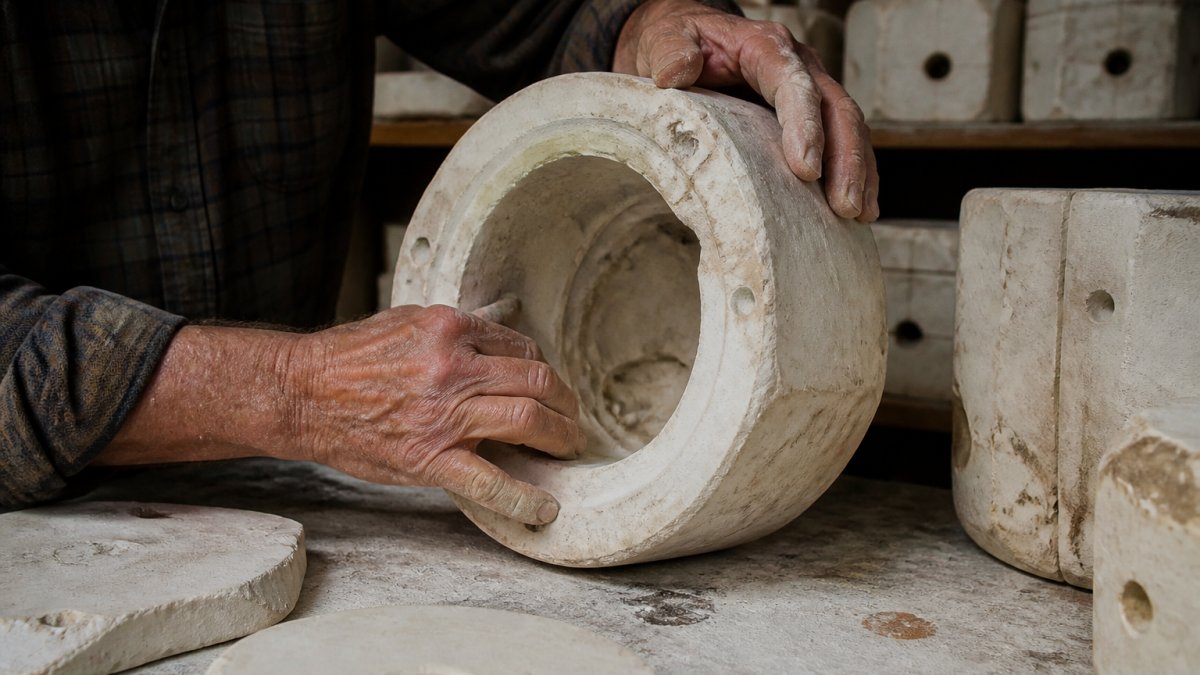
Used ceramic molds can be excellent value or a waste of money, and the difference is visible in about five minutes of inspection. Plaster molds wear out (An Exercise in Logic and Form). Every cast pulls a little moisture and detail from the cavity, and after enough pours the surface goes chalky and soft.
Run this checklist before you pay:
- Cavity surface is smooth, not chalky or crumbling
- No chips, cracks, or repairs along the rim
- Strap, band, or case is intact and fits properly
Pricing, Shipping, and Safe Transactions
Price for used molds varies widely with rarity, condition, and size, so compare completed sales rather than asking prices. A rare piece in good condition commands more; a common form with a worn cavity should cost far less. The sections below give you a framework for judging whether a listing is priced fairly and for protecting yourself when it ships.
Reading the price signal
Most used production molds trade in a broad band that depends more on condition and completeness than on maker name. A common single-cavity ornament or small figure mold in usable condition typically sells for less than a large multi-part plate or nativity mold, and a worn, chalky cavity should be priced well below a crisp one.
Factors that move price up: crisp maker's mark and legible model number, intact strap or band, matching halves with no gap, original box or case, and a cavity that still shows sharp detail.
Shipping fragile plaster without losses
Plaster is heavy and brittle, and a mold packed loosely will crack in transit. Ask sellers how they pack before you pay, and prefer those who describe double-boxing: the mold cushioned inside a first box, that box cushioned inside a second, with the cavity supported so the walls cannot flex.
Expect shipping to reflect weight. Plaster molds are dense, and a large multi-part mold can ship at a cost that rivals the mold itself.
Paying in a way that protects you
Pay through platforms that offer buyer protection, and keep the conversation on-platform until the sale closes. Off-platform payment requests are the most common warning sign in secondhand mold sales; once you pay outside the platform, you lose the dispute process.
If a mold arrives damaged, report it within the platform's window, attach your unboxing photos, and request a return rather than a partial refund.
Buying new production
For new production, our own catalog lists discontinued designs on a special-order basis. The #342C Original Style Extra Lg Branch to 342, for example, is a discontinued mold still available on a non-refundable basis at $286.00, with details confirmed by phone before ordering. Special-order pieces are made to order, so confirm lead time and the non-refundable terms before you commit.

When the total cost does not add up
If the mold plus shipping plus any restoration effort exceeds what a comparable working mold would cost from a reproducer, walk away. Reproduction is often the cheaper path for a mold you intend to use rather than collect.
When a Mold Is Gone: Alternatives and Reproduction
When no listing exists anywhere, you have three realistic options. First, ask a reproducer whether the master exists; many classic lines survive in master form even when retail production stopped. Second, commission a cast from a collector who owns the mold, which is common within trusted communities. Third, adapt a similar form: a different size or close variant often serves the same project.
Backwoods Ceramics and Molds exists for exactly this situation. We maintain master molds across several classic lines and add new design releases regularly, so a mold that looks unavailable today may appear in the catalog later. Subscribing to our emails is the simplest way to hear about new releases before they sell through.
The hardest part of sourcing discontinued molds is not the search itself; it is knowing which channels are worth your time and which pieces are worth the money. Backwoods Ceramics and Molds preserves classic lines including Holland Mold, Ocean State, Nowell, and Gare, with Atlantic molds available through our licensing agreement, and our catalog is organized by mold company and product category so you can go straight to the line you collect.
Frequently Asked Questions
Where can I buy discontinued ceramic molds?
You have three main routes: online marketplaces and community listings where collectors resell used molds, licensed makers who reproduce classic lines, and specialty shops that carry old stock. Backwoods Ceramics and Molds, for example, produces and curates classic lines including Holland Mold, Ocean State, Nowell, and Gare, and offers Atlantic molds through a licensing agreement. Some discontinued pieces remain available on a special-order, non-refundable basis, so call ahead to confirm availability before you commit.
How do I identify the maker of an old ceramic mold?
Look for a stamped or incised mark on the outside of the mold body, usually near the base or along one edge. Holland Mold and Gare pieces typically carry a maker name plus a model number. Check the interior for a production mark pressed into the plaster. If the mark is worn, compare the shape and size against catalog photos from collector groups. Record the model number before you search for a replacement, since it makes long-tail searches far more precise than a generic description.
What should I check before buying a used ceramic mold?
Ask for photos of the interior cavity, the mating edges, and any straps or bands. Chips along the rim and cracks that run through the cavity wall will transfer to your cast, so pass on those. Light surface staining is normal and does not affect the cast. Confirm the mold has been stored dry and ask whether it was used with release agents. Finally, ask the seller to double-box the mold with padding, since plaster breaks easily in transit.
Are discontinued ceramic molds still usable?
Yes, if the cavity is intact. A discontinued mold is simply one no longer in production, not one that has expired. Plaster molds do wear out after repeated casting, so check for a smooth, chalky interior and sharp detail lines. A mold with a chipped exterior or a stained surface can still produce good casts. If the cavity itself is cracked or the detail has softened from overuse, the mold is past its useful life and you should look for a better example.
